Speaking the Truth Today: A Reflection on Truth with Brother Maxime Allard
Montreal
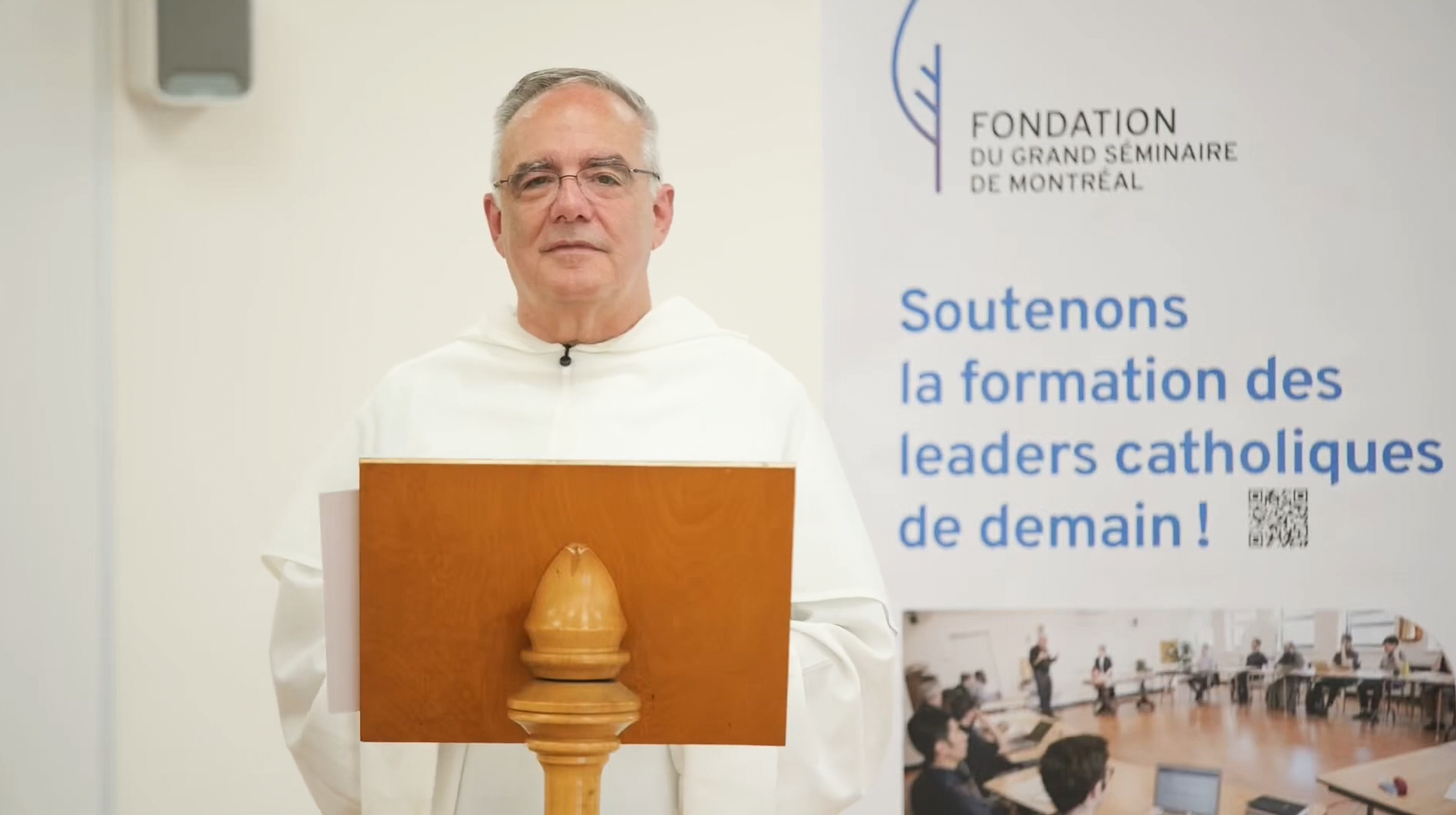
In an era marked by the proliferation of information sources, the rise of artificial intelligence, and the spread of fake news, what does it still mean to "speak the truth"? This is the question addressed by Brother Maxime Allard, a Dominican friar and professor of theology, during a public lecture organized by the Grand Séminaire de Montréal Foundation.
Entitled "Stories of Truth: Speaking the Truth Today, Is It Still Possible?", this event offered a philosophical and theological reflection on our relationship to truth, drawing particularly on the thought of Saint Thomas Aquinas.
Two Ways of Understanding Truth
From the outset of his presentation, Brother Allard acknowledged that the notion of truth raises many questions today: Are we still obligated to speak the truth? Does objective truth exist? How can we discern truth in a context marked by relativism, nihilism, and fake news?
To shed light on these questions, he presented a distinction inspired by the philosopher Michel Foucault. On the one hand, truth can be understood as knowledge that is discovered, demonstrated, and verified through rational methods, as is the case in the sciences. On the other hand, there is a truth that manifests itself as an event: a truth that emerges in an encounter, a revelation, or a decisive moment in life, particularly present in the biblical tradition.
Truth according to Saint Thomas Aquinas
The speaker then focused on the thought of Saint Thomas Aquinas, often summarized by the famous definition of truth as "the correspondence between the intellect and reality."
Brother Allard, however, showed that this definition deserves to be nuanced. While human beings know perfectly what they create themselves (like a craftsman knows the plan of their work) knowledge of the created world always remains partial. It progresses through scientific research but also through trust, listening, and faith.
This perspective reminds us that any quest for truth requires both humility and openness.
Speaking the truth today
In conclusion, Brother Allard proposed three essential attitudes for living in truth today. The first consists of pursuing a critical understanding of the world, by cultivating study, discernment, and dialogue.
The second invites each person to develop genuine personal authenticity. Knowing oneself, particularly through prayer and reflection on one's life, allows one to inhabit the truth of one's existence more deeply.
Finally, he emphasized the importance of remaining open to the unexpected. Not all truth can be fully grasped by reason alone; Certain realities are gradually revealed in events, encounters, and the action of God.
A dialogue with the audience
The conference concluded with a question-and-answer session with the participants. The questions addressed very current topics, including lies of omission, the role of authenticity in human relationships, the subjectivity of opinions, and the challenges that artificial intelligence poses to our way of seeking and communicating truth.
By fostering a dialogue between philosophy, theology, and human experience, this conference offered avenues for reflection to better understand what it means today to seek, embrace, and speak the truth, in a world where it sometimes seems difficult to discern.
To delve deeper
This conference raises essential questions about our relationship to truth, faith, and discernment in the contemporary world. We invite you to watch the entire presentation by Brother Maxime Allard, as well as the question-and-answer session that followed the conference.
▶️ Watch the conference (in French):
Joanne Dorcé
Content Manager and Assistant Director,
Communications Department
Archdiocese of Montreal
Comment
Comment
Add new comment