
Liszt's Canticle for St. Francis, Eight Centuries On
Montreal
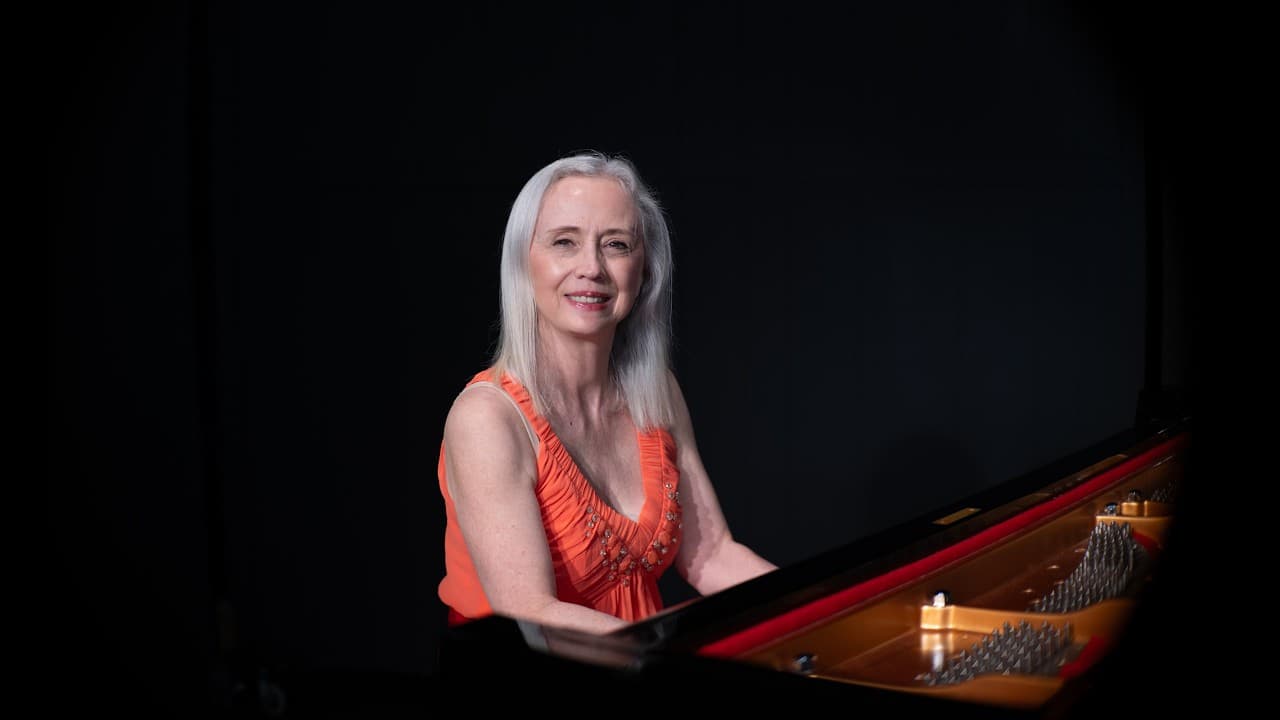
Pianist Anne-Marie Dubois honours the eighth centennial of the death of St. Francis of Assisi with a new filmed interpretation of Franz Liszt's "Cantico di San Francesco," a work inspired by the saint's famous Canticle of Brother Sun.
Known for her work on music and spirituality, Dubois has already devoted several concerts and an album to Liszt's music and its ties to St. Francis. This new production lets viewers discover the piano work in images and sound designed to bring out its full richness.
Liszt and St. Francis
Composed in 1880, the "Cantico di San Francesco" is one of Liszt's last major works. It sets to music the saint's famous canticle, in which Francis praises God through creation.
Liszt's interest in St. Francis ran deep. His father, Adam Liszt, had himself been a Franciscan novice and chose to name his son Franciscus in the saint's honour. The young Liszt is therefore said to have grown up with stories of Francis of Assisi.
At 15, he reportedly even voiced a wish to enter religious life, and his father is said to have responded by encouraging him to live out his faith through his calling as an artist.
Years later, Liszt returned to St. Francis in his music. The "Cantico di San Francesco," written at 69, shows how deeply the saint had inspired him.
The Canticle of Brother Sun: A Hymn of Praise for Creation
Francis wrote the canticle near the end of his life, when illness had weakened him and left him nearly blind. Even so, he sang of creation and thanked God for everything around him.
In his verses, the sun, moon, wind, water and fire become brothers and sisters, a way of naming creation that reflects a deep sense of the fraternity binding all creatures together.
Even in naming "Sister Bodily Death," Francis welcomed the end of his life with faith and hope. His canticle thus became a great prayer of praise in which all creation turns toward God.
From Poem to Score
In the "Cantico di San Francesco," Liszt gives musical form to the various elements of the saint's text. The score follows the poem as it unfolds, so the canticle's images can be heard in the music. In this way, his writing lets listeners recognize some of the elements of creation Francis names, offering another way into this spiritual text.
The poem Liszt set to music is posted below the video on Dubois' YouTube channel, so viewers can follow the words as they hear them interpreted in music.
A Project Rooted in Her Career
The work holds a special place in Dubois' career. She recorded it in 2004 on her album "Franz Liszt, ami de saint François d'Assise" (Franz Liszt, Friend of St. Francis of Assisi), after performing the program in a concert series, mostly in Quebec. She had also recorded it on disc in North America, using the edition of the score published in 1983 by Editio Musica Budapest.
Her interest in St. Francis also comes through in her interpretation of "St. Francis of Assisi: Preaching to the Birds," another Liszt piece inspired by the Little Flowers of St. Francis. That performance is likewise available on her YouTube channel.
Christmas and St. Francis in Sherbrooke
Dubois will also be at the piano Nov. 29 at 3 p.m. at Saint-Charles-Garnier Church in Sherbrooke, for a recital with commentary titled "Noël et saint François" (Christmas and St. Francis).
The recital will include texts by Brother Pierre Brunette, o.f.m., of the Franciscan fraternity of La grotte de Saint-François in Brownsburg-Chatham. An artist and specialist in St. Francis of Assisi and the Middle Ages, he will accompany the music with his writing. Sylvain Turcotte, a great promoter of the Rosary, will also be present.
Admission is free, and donations will be collected.
Watch the Performance
Discover Liszt's "Cantico di San Francesco" now, performed at the piano by Anne-Marie Dubois in this new filmed production.
Comment
Comment
Add new comment